
Choosing the right filter for furnace systems is one of the simplest yet most impactful decisions homeowners can make for indoor air quality, energy efficiency, and HVAC longevity. But with multiple filter materials on the market (fiberglass, pleated, and reusable), it’s easy to feel unsure about which option is best for your home.
Each filter material works differently, affects airflow in unique ways, and comes with its own cost and maintenance considerations. In this guide, we’ll break down the differences between fiberglass furnace filters, pleated air filters, and reusable furnace filters to help you confidently choose the best filter for furnace based on material, not marketing claims.
Why Filter Material Matters for Your Furnace
Your furnace filter does more than trap dust. The material determines:
- How well airborne particles are captured
- How easily air flows through your HVAC system
- How often the filter must be replaced or cleaned
- Long-term heating and cooling costs
Using the wrong filter material can restrict airflow, increase energy usage, and cause unnecessary strain on your furnace. That’s why understanding filter materials is essential when selecting a filter for furnace performance and efficiency.
Fiberglass Furnace Filters: Basic Protection at a Low Cost
Fiberglass furnace filters are among the most affordable options available. They are typically constructed using layered fiberglass strands supported by a thin metal frame.
How Fiberglass Furnace Filters Perform
Fiberglass furnace filters are designed primarily to protect HVAC equipment by trapping larger particles, but they offer limited support for indoor air quality and overall filter for furnace efficiency. They capture large particles like dust and lint but allow smaller particles such as pollen, pet dander, and fine debris to pass through.
Pros
- Low upfront cost
- Minimal airflow resistance
- Widely available
Cons
- Poor filtration of fine particles
- Short lifespan (usually replaced every 1–2 months)
- Higher long-term cost due to frequent replacements
Best for: Homeowners seeking basic furnace protection with minimal investment and no allergy concerns.
Pleated Air Filters: Better Filtration with Ongoing Replacement Costs
Pleated air filters are one of the most commonly used disposable filter types. They are typically made from synthetic fibers or paper filter material folded into pleats to increase surface area.
How Pleated Air Filters Perform
Thanks to their pleated design and layered paper filter material, pleated air filters capture more airborne particles than fiberglass furnace filters. This includes dust, pollen, mold spores, and some allergens, depending on the pleated air filter’s MERV rating.
Pros
- Better filtration than fiberglass furnace filters
- Improved indoor air quality
- Longer lifespan (usually replaced every 2–3 months)
Cons
- Still single-use and disposable
- Ongoing replacement costs
- Higher-rated pleated filters may restrict airflow if not changed on time
Best for: Homes with moderate dust, pets, or seasonal allergies that want better filtration without switching to a reusable furnace filter.
Reusable Furnace Filter: Long-Term Value and Sustainability
A reusable furnace filter is designed to be washed, dried, and reused multiple times, often lasting several years with proper care. Reusable furnace filters are typically made from durable synthetic materials or layered mesh designed to maintain airflow while capturing debris.
How a Reusable Furnace Filter Performs
A reusable furnace filter provides consistent airflow and dependable particle capture when cleaned regularly, making it a reliable filter for furnace performance over the long term. While the filtration approach of a reusable furnace filter differs from disposable filters, it is highly effective for general household dust, debris, and system protection.
Pros
- Lowest long-term cost
- Eco-friendly (reduces landfill waste)
- Consistent airflow when maintained
- Easy monthly cleaning
Cons
- Higher upfront cost
- Requires routine maintenance
Best for: Homeowners looking to reduce ongoing filter costs, minimize waste, and maintain steady HVAC performance year-round. Effectiveness depends on filter quality, MERV furnace filter ratings, and maintenance habits.
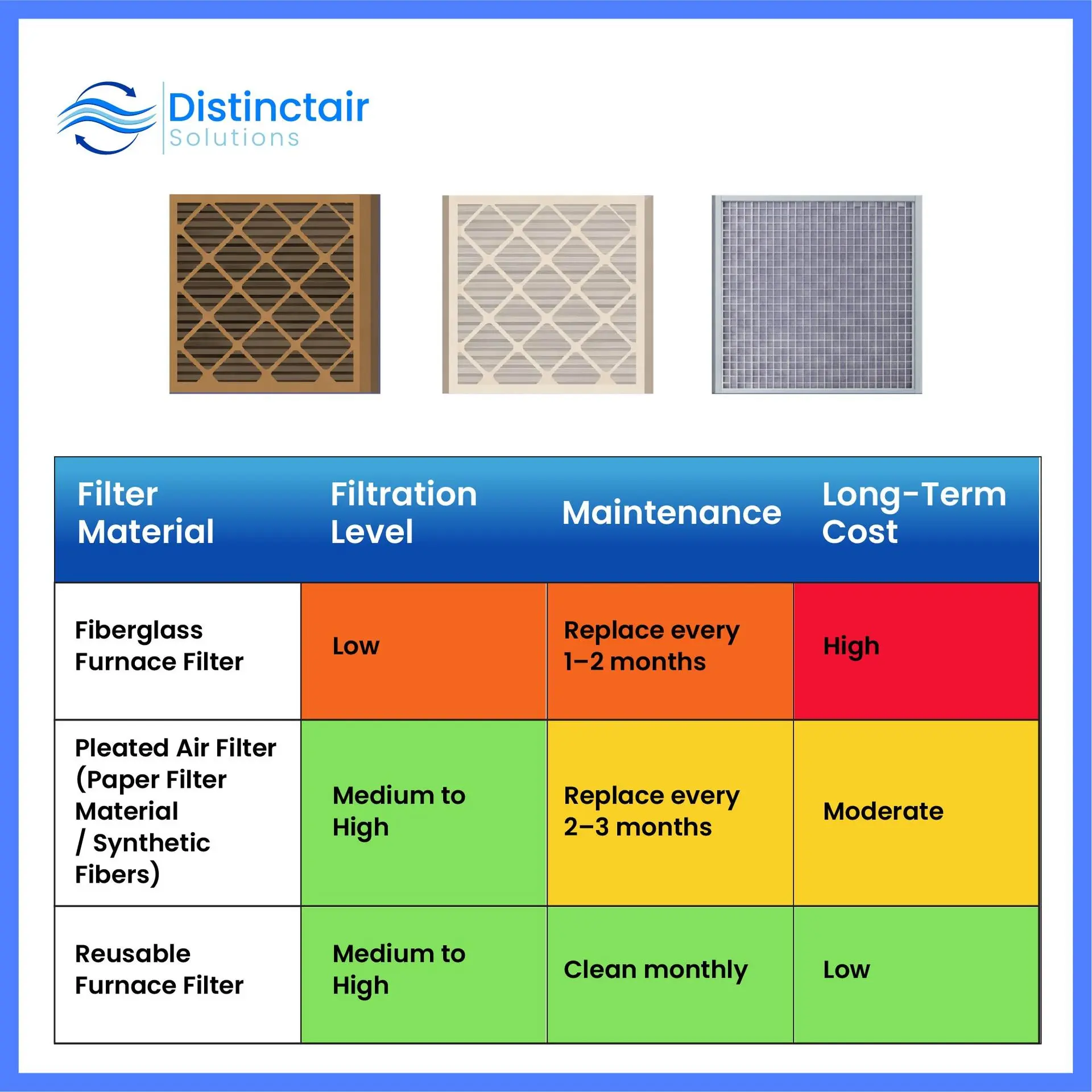
Comparing Filter Materials at a Glance
Filter Material | Filtration Level | Maintenance | Long-Term Cost |
Fiberglass Furnace Filter | Low | Replace every 1–2 months | High |
Pleated Air Filter (Paper Filter Material / Synthetic Fibers) | Medium to High | Replace every 2–3 months | Moderate |
Reusable Furnace Filter | Medium to High (with advanced designs and higher MERV ratings) | Clean monthly | Low |
Which Filter for Furnace Is Best for Your Home?
The “best” filter for furnace systems depends on your priorities, including airflow needs, indoor air quality goals, and long-term maintenance costs.
- Choose fiberglass furnace filters if budget is your only concern and air quality is not a priority.
- Choose pleated air filters made with paper filter material or synthetic fibers if you want better filtration but don’t mind ongoing replacement and disposal costs.
- Choose a reusable furnace filter if you value long-term savings, sustainability, and consistent airflow.
Regardless of material, the most important factor is maintenance. Even the best filter for furnace can cause issues if it’s dirty or neglected.
Making the Smart Choice: Best Filter for Furnace
The material of your filter for furnace plays a major role in how your furnace operates, how clean your indoor air feels, and how much you spend on heating and cooling over time. Understanding the differences between fiberglass furnace filters, pleated air filters, and a reusable furnace filter helps you choose what best fits your home, not just your budget.
For homeowners focused on efficiency, durability, and long-term value, a reusable furnace filter (with advanced design and proper MERV ratings) continues to stand out as a practical and sustainable choice, provided it’s cleaned and maintained regularly.
With regular cleaning and proper sizing, it helps protect your HVAC system while reducing waste and replacement costs. Choosing the right filter for furnace isn’t just about maintenance. It’s an investment in comfort, efficiency, and peace of mind.