
When was the last time you thought about the filter in your furnace or heater? For many homeowners, it’s out of sight and out of mind... until the filter starts demanding attention through reduced airflow or visible buildup! That small piece of HVAC equipment, your MERV furnace filter, does more than just catch dust. It influences air quality, system efficiency, and even energy costs. Choosing the right MERV rating and filter type (reusable furnace filters vs disposable air filters for example) can make a surprisingly big difference.
Understanding MERV Ratings
MERV stands for Minimum Efficiency Reporting Value, a standardized rating system established under ASHRAE Standard 52.2. It measures how effectively an air filter captures airborne particles such as dust, pollen, pet dander, and mold spores. In Canadian homes, residential HVAC systems commonly use MERV furnace filters rated between 5 and 13, depending on system design and air quality needs.
Many HVAC professionals recommend mid-range MERV furnace filter ratings (commonly MERV 7–8) as a practical balance between filtration and airflow. While ASHRAE Standard 62.2 sets a minimum residential filtration baseline at MERV 6, higher MERV ratings may be used if the HVAC system is designed to handle them. Always check manufacturer specifications before upgrading your filter.
MERV Ratings Chart: What the Numbers Really Mean
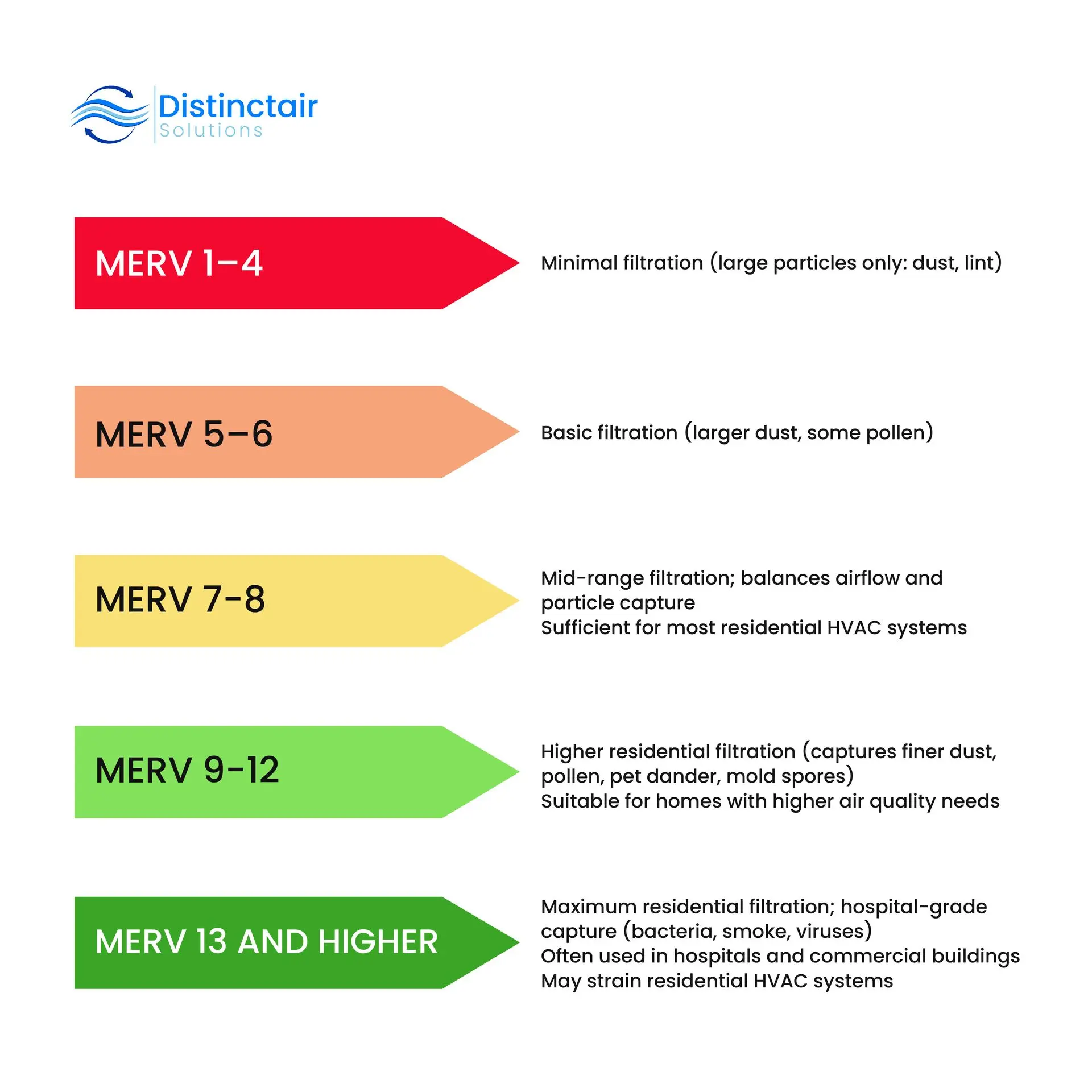
Understanding MERV furnace filters becomes much easier when you see how each MERV furnace filter rating performs in real life. The MERV scale, defined by ASHRAE, applies equally in Canada and helps homeowners compare filtration performance across different MERV ratings. Here’s a simple breakdown of common residential MERV ratings and what they’re best suited for:
MERV 1–4
Captures large particles like lint and dust. These filters offer minimal air cleaning and are generally not ideal for maintaining good indoor air quality.
MERV 5–6
Traps larger dust particles and some pollen. These filters offer modest indoor air quality improvement and MERV 6 meets ASHRAE’s minimum residential filtration guidance, but many smaller allergens still pass through.
MERV 7–8 (Standard filtration for homes)
Captures dust, pollen, pet dander, and mold spores without restricting airflow. This range provides a strong balance of filtration and system efficiency, making it ideal for most residential HVAC systems.
MERV 9–12 (Enhanced filtration for homes)
Captures finer particles like smoke and smaller allergens. Suitable for homes with higher air quality needs, such as households with pets or allergy sufferers. This range is recommended by ASHRAE for quality filtration in residential homes.
MERV 13 and higher (High-efficiency filtration)
Captures very fine particles, including bacteria, smoke, and some viruses. These MERV ratings are often used for hospitals and commercial buildings. These filters can strain residential HVAC systems if not specifically designed for them.
Although MERV furnace filters rated MERV 13 and higher are increasingly recommended by ASHRAE for improved indoor air quality, not all residential HVAC systems can handle these dense filters. Using a high MERV furnace filter rating in an incompatible system may restrict airflow, strain the HVAC, and increase energy usage.
Tip: For most households, MERV furnace filters in the mid-range maintain efficient filtration while keeping your HVAC system running smoothly.
Disposable vs. Reusable Filters: Which MERV Furnace Filters are Better?
Not all filters are created equal, even at the same MERV ratings. Filter construction plays a major role in real-world performance, especially when comparing disposable and reusable options. Disposable filters are widely available in higher MERV ratings, often ranging from MERV 8 up to MERV 13 for residential use, allowing them to capture smaller particles more effectively.
Reusable furnace filters are washable and designed for long-term use. But they typically fall in the lower MERV range (around MERV 1–4). Some higher-quality electrostatic washable filters can reach MERV 6–8, which is generally considered the upper end of what washable MERV furnace filters achieve in residential applications.
Washable filters with MERV ratings above 8 are uncommon, and high-MERV performance is far more typical of disposable filters. These filters generally prioritize airflow and reusability over the higher particle capture levels found in many disposable filters, unless they incorporate advanced features like Protair-X technology used by DistinctAir.
DistinctAir reusable MERV furnace filters go beyond just trapping dust. Their special 3D filter media creates more surface area to capture particles, while antimicrobial agents bonded into the fibers help neutralize up to 99% of bacteria, viruses, and other harmful particles. This means your home enjoys cleaner air, fewer allergens, and a healthier environment, all without restricting airflow or stressing your HVAC system.
Are Higher MERV Ratings Always Better?
It’s a common misconception that higher MERV furnace filters automatically mean better air quality. While higher MERV ratings do capture smaller particles, they also create more resistance to airflow. In many residential systems, filters rated above MERV 13 can:
- Reduce airflow: Your furnace or heater may struggle to push air through the dense filter media.
- Force your system to work harder: Extra strain can shorten your HVAC’s lifespan.
- Increase energy usage: More work means higher energy bills over time.
Tip: The goal isn’t the highest MERV ratings. It’s the right balance of filtration and airflow.
MERV Furnace Filters – Frequently Asked Questions
1. What MERV furnace filter ratings are best for most homes?
ASHRAE 62.2 recommends a minimum of MERV 6 for residential MERV furnace filters. For higher air quality, MERV 8–12 works well, and MERV 13 is ideal only if your system can handle it.
2. Can some MERV ratings be too high for my furnace?
Yes. Filters rated above MERV 13 can restrict airflow in systems not designed for them, leading to higher energy bills and system strain.
3. How often should MERV furnace filters be replaced or cleaned?
Disposable pleated air filters typically need replacement every 1–3 months. Reusable furnace filters should be washed according to manufacturer guidelines to maintain consistent performance.
The Smart Pick: Reusable MERV Furnace Filters with the Right MERV Ratings
Sometimes, the smallest changes in your home’s HVAC system can make a surprisingly big difference. Choosing the right MERV furnace filter (especially a high-quality reusable one) offers multiple benefits for homeowners:
- Efficient MERV furnace filters trap dust, pollen, pet dander, and other airborne particles before they circulate.
- The correct MERV rating enables proper airflow, which is essential for your furnace or heater to run more efficiently.
- Washable MERV furnace filters offer long-term use and reduced waste, while disposable options typically provide higher MERV options for enhanced filtration.
- Advanced designs of washable furnace filters can provide more efficient filtration even at comparatively lower MERV furnace filter ratings like MERV 7 or 8.
The key is selecting a MERV furnace filter that balances effective particle capture with optimal airflow for your specific HVAC system. Making an informed choice helps ensure cleaner air and reliable performance throughout the year.