
Buying a new home is exciting, but it also comes with responsibility. One of the smartest moves you can make as a homeowner is completing a thorough house inspection checklist, especially for systems that affect comfort, safety, and long-term costs. Among them, your HVAC system deserves special attention.
While a full professional HVAC inspection is ultimately recommended, a basic DIY check can help you spot obvious issues early. With the right checklist, you can identify warning signs, prevent minor problems from becoming costly repairs, and ensure your furnace and HVAC setup are on track from day one.
This guide walks you through essential DIY HVAC inspection tips every homeowner should know.
Why HVAC Should Be a Priority on Your House Inspection Checklist
Your heating and cooling system is one of the most expensive and heavily used components in a home. Ignoring it on your house inspection checklist can lead to higher energy bills, poor indoor air quality, unexpected breakdowns, and a shortened equipment lifespan.
Even if your new home is newly built, installation issues or setup mistakes can hide problems, while older or previously owned homes may have wear and tear that isn’t obvious during a quick walk-through. Checking your HVAC system early helps prevent surprises and ensures comfort, efficiency, and safety from day one.
Start with the Basics: Visual HVAC Inspection
Before turning anything on, begin with a simple visual HVAC inspection.
Visual HVAC Inspection: What to Look For
- Rust, corrosion, or moisture around the furnace or air handler
- Loose wiring or disconnected ducts
- Signs of past leaks or water damage
- Obvious cracks or damage to equipment housing
If anything looks unsafe or heavily worn, that’s a sign a professional HVAC inspection may be needed. Remember, a visual check is just the first step. Some issues require specialized tools and expertise to identify.
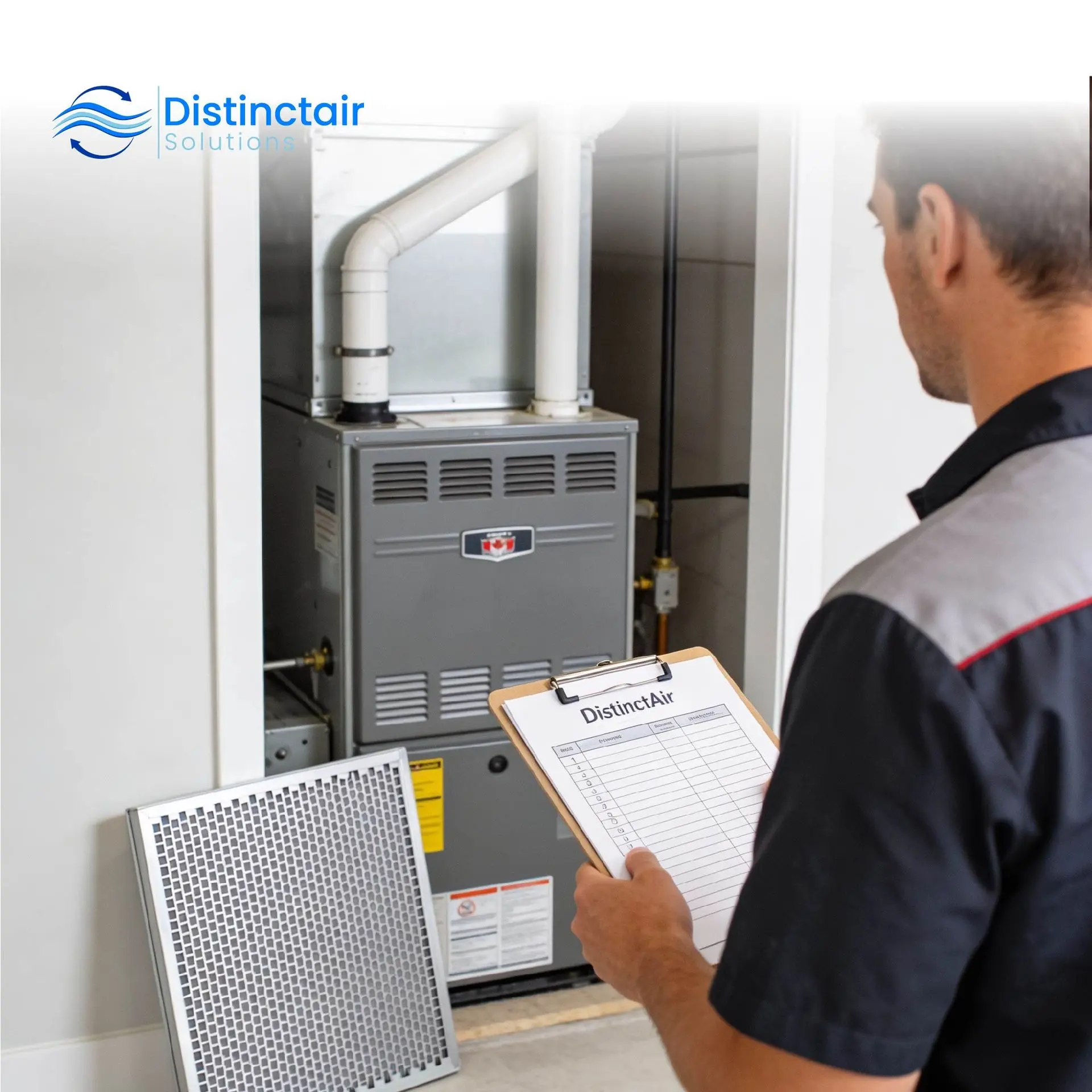
Furnace Inspection Basics for New Homeowners
Your furnace plays a central role in keeping your home comfortable. A basic furnace inspection can help you spot common issues before they become costly repairs.
Furnace Inspection Checklist: What to Look For
- Age of the furnace: Units over 15–20 years old may be inefficient
- Air filter condition: Dirty or clogged filters restrict airflow
- Burner area: Should be clean and free of debris
- Flame color (gas furnaces): A steady blue flame indicates proper combustion
These simple steps should always be part of a new homeowner’s house inspection checklist. Remember, some issues like gas leaks or internal cracks require a professional inspection for full safety assurance.
Don’t Skip the Furnace Filter Check During Furnace Inspection
Furnace filters are small but powerful and should be a part of your house inspection checklist.
- Replace disposable filters if they’re dirty
- Clean reusable or washable filters thoroughly
- Confirm the filter fits correctly and isn’t bent or damaged
A clean filter improves airflow, protects HVAC components, and helps maintain healthy indoor air. This is especially important in a new home where dust and construction debris may still be present.
HVAC Inspection Tip: Check Airflow and Vents
Proper airflow is essential for HVAC efficiency. Blocked or leaking ducts force your system to work harder, increasing energy use and wear. During your HVAC inspection, make sure to:
- Inspect vents for dust, debris, or obstructions
- Ensure furniture or rugs aren’t blocking airflow
- Check that air distribution feels even across rooms
Uneven airflow is often an early sign of duct leaks or filter issues, both of which are easier to fix when caught early.
Test Heating and Cooling Modes
Once visual checks are complete, the next step during your DIY HVAC inspection is to test the system in both heating and cooling modes (weather permitting).
What to Observe
- Does the system start smoothly?
- Are there unusual noises (rattling, banging, grinding)?
- Does air flow evenly from vents?
- Does the system reach the set temperature in a reasonable time?
Inconsistent performance may indicate airflow problems, thermostat issues, or mechanical wear.
DIY HVAC Inspection Checklist for Your New Home
You don’t need to be an expert to perform basic HVAC inspection. Adding these tasks to your house inspection checklist can prevent many common problems. Key DIY HVAC inspection steps include:
- Replacing or cleaning the furnace filter
- Checking thermostat accuracy and settings
- Inspecting visible duct connections
- Confirming outdoor units are clear of debris
Performing a seasonal HVAC inspection helps maintain efficiency and ensures your system responds properly during extreme temperatures.
When to Opt for Professional HVAC Inspection
While DIY HVAC Inspection checks are valuable, some issues require expert evaluation. Consider scheduling a professional HVAC inspection if:
- The system is aging or poorly documented
- You notice gas odors, burning smells, or frequent cycling
- Energy bills are unusually high
- The home inspection report flagged HVAC concerns
A licensed technician can perform advanced furnace testing, identify hidden safety concerns, and optimize system performance. Think of professional HVAC inspection as a complement to your DIY house inspection checklist, not a replacement.
Final Thoughts: Protect Your Investment from Day One in Your New Home
A new home is one of the biggest investments you’ll ever make. Including HVAC inspection in your house inspection checklist helps you avoid surprises, improve energy efficiency, and maintain year-round comfort. A complete house inspection checklist doesn’t stop at walls and wiring. HVAC and furnace systems deserve equal attention, especially in a new home where maintenance history may be limited.
By performing a basic furnace inspection and monitoring system performance early on, you protect your home before small issues turn into costly repairs. A little attention now can maintain steady indoor comfort, control heating and cooling costs, and avoid premature equipment failure.
Staying proactive with HVAC care and furnace inspection isn’t just about maintenance. It’s about protecting your new home, your budget, and your peace of mind for years to come.