
Choosing the right heating and cooling system is one of the most important decisions for constant home comfort, energy efficiency, and operating costs. Homeowners often find themselves comparing a heat pump vs furnace vs mini split, especially when upgrading an older system or moving into a new home.
While each system has its strengths, comfort and efficiency depend not just on the equipment itself, but also on proper sizing, quality installation, airflow, and how well your home retains heated or cooled air.
If you’re weighing heat pump vs furnace, or wondering whether a mini split is worth considering, this guide breaks down how each system works, where it performs best, and which option delivers the most constant home comfort for your lifestyle and climate.
Understanding the Basics: Heat Pump vs Furnace vs Mini Split
Before comparing efficiency and constant home comfort, it helps to understand how each system operates. Let's dive into heat pump vs furnace vs mini split basics:
A furnace generates heat by burning fuel (natural gas, propane, or oil) or using electricity, then distributes warm air through ductwork. Gas furnaces are known for fast, reliable heating and strong performance in very cold climates, but they only provide heating and require a separate air conditioner for cooling. Electric furnaces may be less cost-effective in areas with high electricity prices.
A heat pump moves heat rather than creating it. In winter, it pulls heat from outside air and transfers it indoors. In summer, it works like an air conditioner, moving heat out of your home. Heat pumps are generally more energy-efficient than traditional electric furnaces, especially in moderate climates. In extreme cold, air-source heat pumps may need auxiliary heating or cold-climate models to maintain efficiency.
A mini split is a ductless heat pump with an outdoor unit connected to one or more indoor air handlers. type of heat pump that operates without ductwork. It uses an outdoor unit connected to one or more indoor air handlers mounted on walls or ceilings. They provide zoned temperature control and high efficiency, but multi-zone systems may require careful installation and balancing to ensure consistent comfort across all rooms.
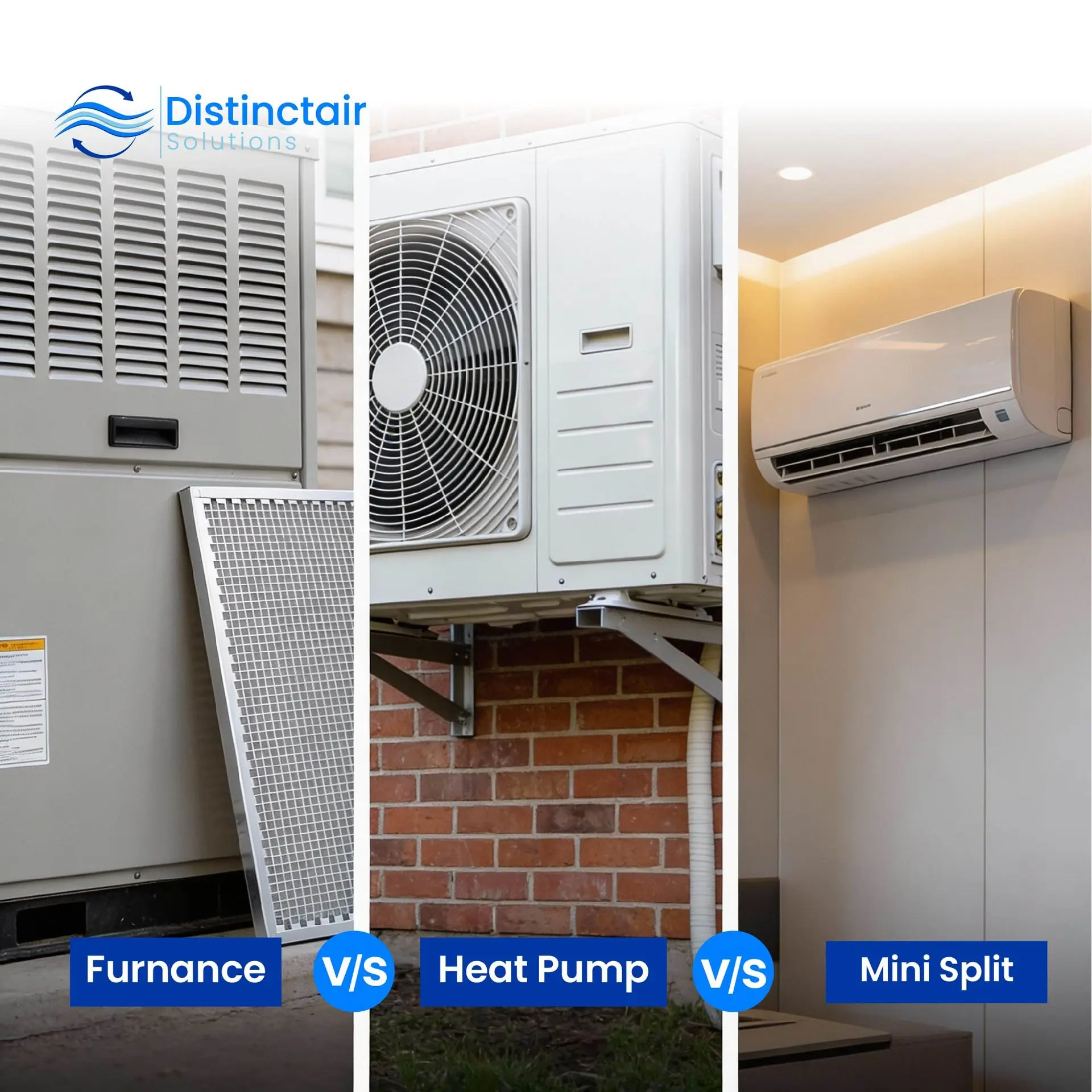
Heat pump vs Furnace : Which Is More Efficient?
Efficiency is one of the biggest factors when comparing a heat pump vs furnace. High-efficiency gas furnaces can reach 90–98% AFUE, making them an excellent option in very cold climates or regions where natural gas is affordable. However, fuel costs can fluctuate based on market conditions.
Heat pump efficiency is measured using HSPF and SEER ratings. In moderate climates, heat pumps are often two to three times more efficient than electric furnaces because they move heat rather than create it. As a result, they typically use less energy to maintain steady indoor temperatures.
From an energy-use standpoint, heat pumps typically outperform furnaces, especially in regions with mild to moderate winters. Regardless of system type, proper airflow and filter maintenance play a key role in real-world efficiency.
Mini Split vs Central Systems: Comfort Control Matters
For many homeowners, constant home comfort comes down to temperature consistency. Mini split systems provide room-by-room or zoned temperature control, allowing you to heat or cool only the spaces you’re using. This helps reduce hot and cold spots and minimizes wasted energy when zoning and settings are used correctly.
Central furnace or heat pump systems deliver whole-home comfort from a single thermostat. However, uneven temperatures can occur if ductwork is poorly designed, aging, or leaky. For homeowners frustrated with inconsistent temperatures, a mini split often delivers superior room-by-room comfort control.
Climate Plays a Major Role
Your local climate strongly influences which system performs best.
- Cold climates: Furnaces remain highly reliable
- Mild to moderate climates: Heat pumps excel
- Mixed climates or older homes: Mini splits offer flexibility
This is why the heat pump vs furnace debate rarely has a one-size-fits-all answer.
Installation and Operating Costs
Furnaces
- Lower upfront cost if ductwork already exists
- Higher long-term fuel costs depending on energy prices (Fuel costs can be lower in gas-heavy regions)
Heat Pumps
- Higher initial cost
- Lower monthly energy bills (climate-dependent)
- Potential rebates and incentives in many regions
Mini Splits
- Higher per-room installation cost
- Excellent long-term efficiency
- Minimal structural changes required
Homeowners focused on long-term savings and constant home comfort often favor heat pumps or mini splits despite higher upfront costs.
Maintenance and Airflow Considerations
No matter which system you choose, airflow and filtration matter.
- Furnaces and ducted heat pumps rely heavily on clean filters
- Mini splits use internal filters that must be cleaned regularly
- Restricted airflow reduces efficiency and comfort across all systems
Proper filter maintenance is one of the most overlooked factors affecting system performance and lifespan. Some homeowners opt for reusable furnace filters in ducted systems to maintain consistent airflow while reducing replacement waste, as long as they are cleaned on a regular schedule.
Which System Is Right for Your Home? Heat Pump vs Furnace vs Mini Split
Choose a furnace if:
- You live in a very cold climate
- Natural gas is affordable
- You want fast, powerful heating
Although modern cold-climate heat pumps narrow this gap, furnaces still win for rapid heat delivery in extreme cold.
Choose a heat pump if:
- You want high efficiency and lower energy bills
- You prefer one system for heating and cooling
- Your climate supports year-round heat pump performance
In very cold climates, backup heat (electric or gas) may still be required.
Choose a mini split if:
- You want zoned, customizable comfort
- Your home lacks ductwork
- You’re targeting specific rooms or additions
Whole-home mini-split systems are possible, but costs and aesthetics should be considered.
Final Verdict: Comfort and Efficiency Go Hand in Hand
The heat pump vs furnace vs mini split debate comes down to climate, home layout, and comfort priorities. Each system can deliver excellent results when properly sized, installed, and maintained.
For homeowners seeking constant home comfort, energy efficiency, and long-term savings, modern heat pumps and mini split systems are increasingly attractive alternatives, while furnaces remain a strong, dependable choice in colder regions.
Understanding how each option works helps you invest confidently in comfort that lasts for years to come. Consistent maintenance, including proper filter selection and cleaning, supports system performance no matter which heating or cooling solution you choose.